

I fish the Provo constantly, and the question I get most isn’t about flies or hatches. It’s whether someone with no experience can actually keep up out here, so that’s where this guide starts. Below, I’ll walk through which stretches of the river we fish and why, what species you can expect, whether you need experience to book a trip, what the license situation actually is, and the best times of year to plan around.
What People Mean When They Say “Provo Fly Fishing”
The Provo River runs through Utah’s Wasatch Back, and most of the guided fishing happens on the Middle and Lower stretches. The Middle Provo, near Park City and Sundance, is a tailwater fishery. That means the water comes from below a reservoir instead of straight off snowmelt, which is why it fishes well even in months when other rivers are blown out or too cold to bother with. The Lower Provo, closer to Heber City, has its own character and its own rhythm, and it’s part of the regular rotation depending on flows and time of year.
Conditions shift section to section, week to week. Part of what a guide actually does is know which stretch is fishing best on a given day, instead of showing up to whichever spot happens to have parking.
Why the Provo Holds Up as a Fishery
What You’re Actually Catching
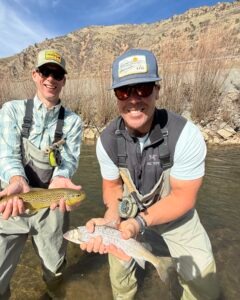
Brown trout and rainbow trout make up most days on the Provo, and whitefish show up often enough that catching all three in a single outing isn’t rare. Guests have landed what amounts to a small “Provo trifecta” more than once. Fishing is fishing, so we aren’t making any promises about what you may catch on a given day. But there is variety here, and it’s one of the reasons this river holds up compared to a lot of other Utah water.
Why It Fishes Well Even When Other Rivers Don’t
Because the Middle Provo is a tailwater, the temperature and flow stay more consistent than a freestone river that’s at the mercy of snowpack and weather. That stability is why the Provo can produce good fishing across most of the year, not just during a short summer window. It’s not magic. It’s plumbing. But it’s the kind of detail that matters if you’re trying to plan a trip around a specific month.

What a Guided Trip on the Provo Actually Looks Like
Half-Day Walk and Wade vs. Full-Day Float
A half-day walk and wade trip is built for people who want to get on the water without giving up their whole day. You’ll cover less water than a float, but you’ll spend more time working specific runs and learning to read them, which matters if you’re trying to actually pick up the skill and not just watch someone else catch fish.
A full-day float covers more ground. You’ll fish stretches that aren’t accessible on foot, and there’s more time built in for lunch, conversation, and just being out there. Neither option is the “better” one. It depends on how much time you’ve got and what kind of day you’re after.
What’s Included
Every trip includes gear, instruction, and a guide who’s paying attention to your specific day, not running you through a script. You can see the full breakdown of half-day, full-day, and float trip options and pick based on your schedule and what you’re hoping to get out of it.
Why Every Trip Is Private
There’s no shared-boat situation here, no getting grouped in with strangers to fill a trip. It’s you, your group, and one guide. That matters more than people expect once they’ve actually experienced the alternative somewhere else.
Do You Need Experience to Fish the Provo With a Guide?
No. That’s the direct answer, and it’s worth saying plainly because a lot of people talk themselves out of booking over this exact worry. Most guests aren’t experienced fly anglers. They’re guys who fish occasionally, know they’d catch more with someone showing them the ropes, and don’t want to spend half a trip figuring out rigging and access on their own.
If you’ve never picked up a fly rod, you’ll get up to speed quickly enough to start fishing for real within the first hour. If you’ve fished before and want to sharpen specific skills, there’s plenty of room to go deeper. The Provo doesn’t require you to already know what you’re doing. That’s the point of bringing a guide.
One Thing People Get Wrong Before Booking
A lot of visitors assume a fishing license isn’t necessary if they’re with a guide. It is. Utah requires a valid fishing license for anyone fishing its waters, guided or not. It’s an easy step to handle before your trip, and getting it out of the way in advance means your guide day is spent fishing instead of dealing with paperwork. You can check license requirements and other trip prep details or purchase one directly through the Utah Division of Wildlife Resources.
Best Time of Year to Fish the Provo
Spring is runoff season. Flows rise as snowpack melts, and fishing shifts around that reality rather than a calendar date. Early nymph fishing picks up as things settle.
Summer is the Provo’s prime stretch. Dry fly opportunities open up, evening hatches get consistent, and this is when most corporate outings and family trips come through.
Fall might be the best dry fly season of the year on this river. Cooler water, fewer crowds, and serious anglers tend to show up looking for exactly this window.
Winter still fishes, particularly on the tailwater sections where nymphing stays productive even when the air temperature says otherwise. It’s quieter, and some guests actually prefer it for that reason alone.
For current conditions before you book, the Provo River fishing report gets updated regularly with what’s actually happening on the water, since hatch timing and flows shift from week to week in ways a general seasonal guide can’t capture. You can also check live flow data directly through USGS stream gauges for the Middle Provo if you want the numbers yourself.
What Guests Notice After Fishing With a Guide
The thing that seems to surprise people most isn’t the fish. It’s how much they take home in terms of actual skill. Guests have reported catching more fish on their own after a guided trip, specifically once they’ve picked up techniques like the bounce rig. That’s not an accident. A big part of guiding well is teaching in a way that transfers, so the day doesn’t end when the trip does.
There’s also a conservation piece that runs through all of this. Understanding the river, what threatens it, and what it takes to keep it healthy is part of spending a day here, not a lecture bolted onto the trip.
FAQ
Do I need a license to fish the Provo River?
Yes. Utah requires a valid fishing license for anyone fishing its waters, and it’s something to handle before your trip date rather than the morning of.
What fish will I catch on the Provo River?
Brown trout and rainbow trout are the most common, with whitefish showing up often enough that a three-species day happens more than you’d think. There’s no guarantee on numbers or size on any given day.
Is the Provo River good for beginners?
Yes. Most guests aren’t experienced fly anglers, and a guided trip is built around getting you fishing productively within the first hour, regardless of your starting point.
What’s the best time of year to fly fish the Provo?
Summer and fall tend to be the strongest windows, though the tailwater sections fish reasonably well year-round. Current conditions matter more than the calendar, so a recent report is worth checking before you plan around a specific month.
How much does a guided Provo River trip cost?
Pricing depends on trip length and format, whether that’s a half-day walk and wade, a full-day outing, or a float trip. Full details are on the trips and rates page.
Can I keep fish I catch on the Provo River?
Utah’s catch-and-keep regulations vary by section and species, so this is worth confirming directly for your specific trip rather than assuming a blanket answer.
Booking a Provo Trip
The Provo has a reputation for a reason, but the river alone isn’t what makes a trip worth it. It’s spending the day with someone who knows this water well enough to put you in the right water at the right time, and who’s more interested in you leaving with something you can use than in padding a fish count. Whether you’re brand new to fly fishing or looking to sharpen what you already know, that’s the day this is built around.
Get in touch to plan your trip and we’ll figure out which stretch of the Provo, and which format, makes sense for you.